
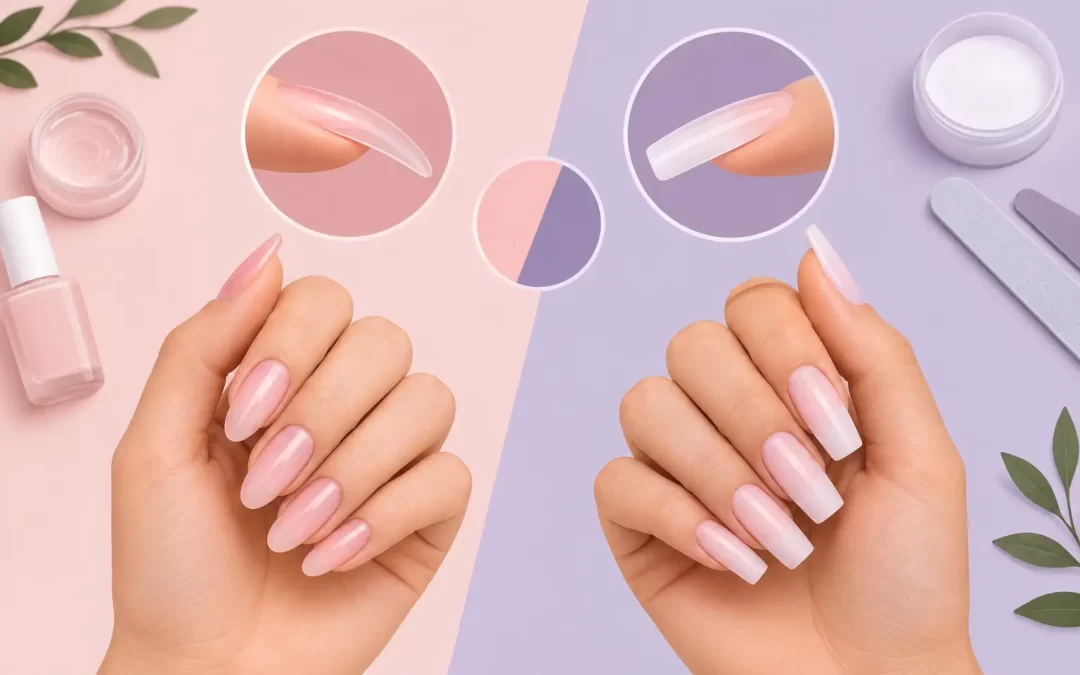
A last-minute dinner on Ocean Drive, a beach weekend, a work event where every handshake counts – your manicure has to look polished and feel like you. The choice between gel extensions versus acrylics is less about which service is universally better and more about matching the enhancement to your natural nails, routine, and preferred finish.
Both can create long, beautifully shaped nails with color that stays glossy far beyond a regular manicure. Yet they differ in how they are built, how they wear, and what they ask of you between appointments. Knowing those differences makes it much easier to leave the salon with a look you love, not one you have to work around.
Gel Extensions Versus Acrylics: The Core Difference
Acrylic enhancements are created by combining a liquid monomer with polymer powder. The material forms a workable bead, which a trained nail technician shapes over your natural nail or a tip before it hardens in the air. Acrylic is known for its firm, durable structure and ability to create pronounced length, sharp shapes, and a strong foundation for detailed nail art.
Gel extensions use a gel-based system that cures under an LED or UV lamp. The term can refer to sculpted hard gel extensions or full-coverage soft gel tips bonded to the natural nail. The exact technique matters, which is why a consultation is useful. A technician can recommend the system that best suits your desired length, nail condition, and lifestyle.
The visual result can be equally glamorous. The distinction is in the structure beneath the polish. Acrylic tends to feel more rigid and substantial, while gel extensions are often favored for a lighter, more flexible feel. Neither choice is automatically healthier or more damaging. Careful application, proper prep, and professional removal make the real difference.
The Look and Feel on Your Hands
For guests who want a sleek, natural-looking extension, gel can be especially appealing. It often has a glassy finish and a slightly more flexible movement that can feel closer to the natural nail. Full-coverage gel tips can also create a refined, consistent shape with less bulk, making them a beautiful option for almond, oval, or soft-square nails.
Acrylics offer more architectural strength. If you love extra-long coffin nails, dramatic stilettos, crisp French tips, or statement nail art, acrylic can provide the stable canvas those looks require. An experienced technician can still keep acrylics elegant and balanced, but the material is typically more structured than gel.
The best option also depends on your personal comfort. Some guests enjoy the secure, solid feel of acrylic, particularly when their natural nails bend or break easily. Others prefer gel extensions because they feel lighter during everyday tasks such as typing, applying makeup, or handling a phone. There is no wrong preference here – the right set is the one that complements your hands without feeling distracting.
If you want a natural finish
Choose gel extensions when you are drawn to a thinner-looking profile, flexible wear, and high-shine color. They are a favorite for polished vacation nails, everyday neutrals, and minimalist designs that look refined from every angle.
If you want dramatic length and strength
Acrylics are often the stronger choice for significant length, sculpted shapes, and guests who are tough on their hands. They can be ideal for bold color, chrome, gems, intricate art, and long-lasting special-event nails.
Durability Depends on More Than the Product
Acrylic has a reputation for durability, and for good reason. Its firm structure can stand up well to longer lengths and frequent use. That said, gel extensions can also wear beautifully when the proper system is used and the set is customized correctly. A shorter gel extension on a guest with an active routine may outlast an overly long acrylic set that catches on everything.
Your habits matter. Time in salt water, frequent handwashing, hot yoga, opening packages with your nails, and using your fingertips as tools all affect wear. Miami’s heat and humidity do not automatically ruin enhancements, but sunscreen, tanning oils, chlorine, and sand can make thoughtful aftercare more valuable.
For either service, wear gloves while cleaning, moisturize your cuticles daily, and never pick at lifting product. If an edge lifts, schedule a repair rather than trying to glue it down at home. A small issue handled early protects the natural nail and keeps your set looking fresh.
Maintenance: Fills, Removal, and Timing
Acrylics are commonly maintained with fills as the natural nail grows. During a fill appointment, the technician refreshes the growth area, rebalances the structure, and can update the color or design. This makes acrylic a practical choice for guests who enjoy maintaining the same enhancement over time.
Hard gel extensions may also be filled, depending on the specific product and technique. Soft gel full-coverage tips are often removed and replaced with a new set rather than filled, although service protocols vary. Your technician should explain what your selected system requires before the appointment begins.
Most guests plan maintenance every two to three weeks, but the best schedule depends on growth rate, length, and visible lifting. Waiting too long can shift the balance of the extension and increase the chance of breaks. Freshly maintained nails look more luxurious, feel more comfortable, and are easier to protect.
Removal deserves the same care as application. Acrylic and gel should never be peeled, bitten, or forcibly popped off. Improper removal can take layers from the natural nail plate, leaving nails thin and sensitive. Professional removal is measured, gentle, and followed by conditioning care so your natural nails have the best possible foundation for the next service.
What About Nail Health?
The question is not simply gel versus acrylic. Nail health depends on the condition of your natural nails, the technician’s preparation and application, the length you choose, and whether removal is done correctly. A beautiful enhancement should be customized, not rushed.
A skilled technician avoids over-filing, uses proper sanitation, and selects an appropriate length and shape for your nail bed. If your nails are already brittle, peeling, or recovering from previous damage, a shorter extension or a restorative manicure may be the wiser starting point. You can always build toward more length once your nails feel stronger.
Sensitivity is another reason to communicate openly. Both gel and acrylic systems contain ingredients that can cause reactions in some people, particularly if product touches the skin or is improperly cured. Tell your technician about prior sensitivities, allergies, or discomfort, and do not ignore redness, itching, or swelling after a service. Beauty should feel indulgent, never irritating.
Choosing for Your South Beach Schedule
If you are visiting Miami Beach for a wedding, weekend getaway, or celebration, gel extensions can deliver a clean, camera-ready finish with minimal visual bulk. They pair beautifully with glossy nudes, bright vacation color, French designs, and understated nail art.
If your calendar includes nightlife, regular events, travel, or a long stretch before your next appointment, acrylics may give you the dependable structure you want, especially at longer lengths. They are also a strong option when you want a dramatic shape that holds its form through a busy schedule.
At Sky Nails & Spa of South Beach, an expert nail consultation can turn this decision into a personalized service rather than a guess. Bring inspiration photos, be honest about how you use your hands, and mention whether you want subtle elegance or full statement nails. The best-quality result starts with choosing an enhancement designed for your real life.
Your next set should make getting dressed, posing for photos, and reaching for your favorite cocktail feel a little more polished. Choose gel when you want light, glossy flexibility; choose acrylic when you want lasting, sculpted strength – then let expert application make the difference you can see.