
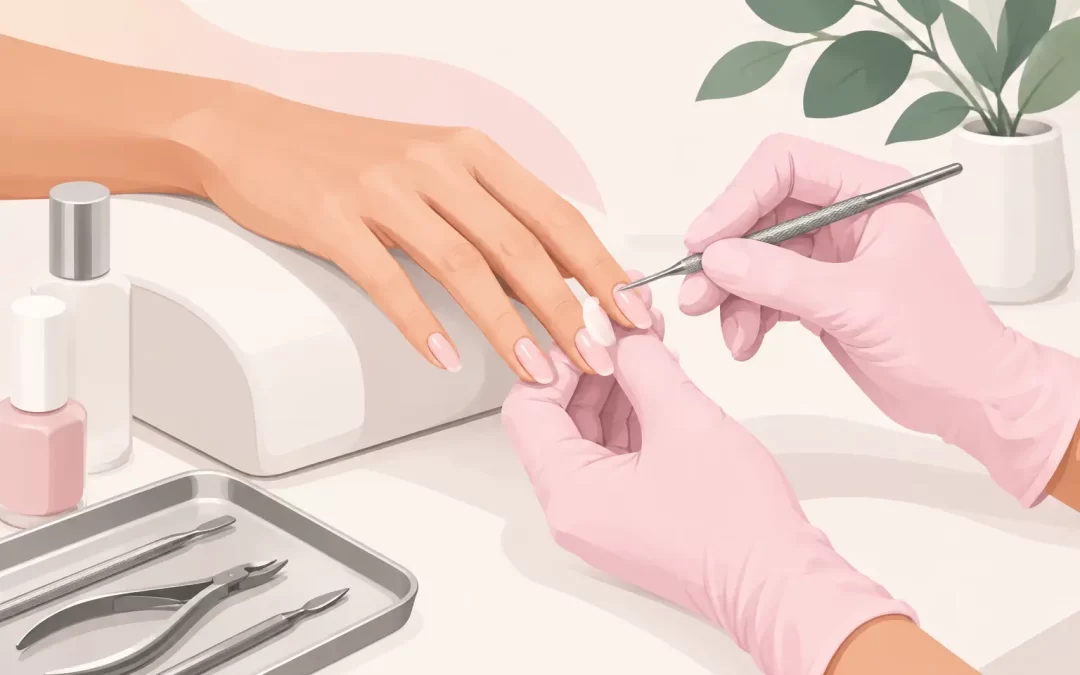
A fresh manicure can look beautiful for days, but the area around the nail often tells the real story. When cuticles are carefully refined and polish is applied close to the nail plate, the result is a remarkably clean, polished finish that lasts. So, what is a Russian manicure? It is a highly detailed dry manicure technique that uses professional electric-file bits to clean and refine the cuticle area before polish, gel, or extensions are applied.
The technique has become especially popular with guests who love a crisp, editorial nail look and want their manicure to grow out more gracefully. Done correctly by a trained nail professional, it delivers precision that traditional soaking and hand-cuticle work may not achieve. It is not a rushed add-on, though. The best results come from careful preparation, the right tools, and a technician who knows when to stop.
What Is a Russian Manicure, Exactly?
A Russian manicure is also called a dry manicure, e-file manicure, or hardware manicure. Instead of soaking hands in water to soften the cuticle, the technician works on dry nails using a professional electric file fitted with specialized bits. These small attachments gently lift and remove nonliving cuticle tissue and refine the skin around the nail.
The goal is not to remove as much skin as possible. It is to create a neat, balanced nail contour while protecting the living tissue that helps defend the nail matrix from irritation and infection. Once the nail plate and cuticle area are properly prepped, color can be applied with exceptional precision, often very close to the cuticle line.
Despite the name, a Russian manicure does not refer to one specific polish brand or color style. It is a preparation technique. You can pair it with regular polish, gel polish, structured gel, nail art, French tips, or extensions, depending on your desired finish and nail goals.
Why the Finish Looks So Clean
The signature appeal of a Russian manicure is its detail. Dry preparation gives the technician a clear view of the cuticle and the small areas of adhered dead skin on the nail plate. With controlled e-file work, the nail surface can be thoroughly prepared for product adhesion without relying on a water soak.
That preparation may help gel polish or structured gel sit more evenly and reduce early lifting when the rest of the service is performed correctly. Polish can also be placed closer to the cuticle without flooding the skin, creating a more seamless, freshly done appearance.
For Miami Beach guests planning a vacation, event, photoshoot, or a full week of South Beach plans, that polished look can be especially appealing. As the natural nail grows, there is still growth at the base, but the close application can make it appear less noticeable at first.
Russian Manicure vs. Traditional Manicure
A traditional manicure commonly includes a hand soak, gentle pushing back of the cuticle, trimming when appropriate, nail shaping, and polish. It can be an excellent option for routine maintenance, especially for guests who prefer a classic, relaxing service.
A Russian manicure is more technique-driven and typically takes longer. Rather than softening skin in water, the technician relies on e-file attachments, lighting, product knowledge, and a steady hand. The dry method can deliver more exacting cuticle refinement, but it requires training and focus at every stage.
Neither option is automatically better for every person. If your cuticles are sensitive, your nails are thin or damaged, or you simply want a simple polish refresh, a traditional manicure may be the more comfortable fit. If you enjoy detailed nail maintenance, wear gel regularly, or want a very crisp cuticle line, Russian technique may be worth the extra time.
It is not the same as a gel manicure
This is a common point of confusion. Gel manicure describes the type of polish system used and cured under a lamp. Russian manicure describes how the nail and cuticle area are prepared. You can receive a Russian manicure with gel polish, but the terms are not interchangeable.
Likewise, Russian preparation can be used before builder gel, gel extensions, acrylic enhancements, or a refined natural-nail finish. Your technician should recommend the service combination that suits your lifestyle, nail condition, and desired level of maintenance.
Is a Russian Manicure Safe?
A Russian manicure can be safe when it is performed by an experienced, properly trained professional using sanitized tools and a thoughtful, conservative approach. Precision does not mean aggressive filing or extensive cutting. The skin around your nails is delicate, and overworking it can lead to redness, tenderness, peeling, or a greater risk of infection.
The most important factor is the technician, not the tool. An e-file is only as safe as the person using it. A skilled professional understands bit selection, speed, pressure, nail anatomy, and how to distinguish nonliving cuticle from healthy skin. They should also be attentive to your comfort throughout the appointment.
Be cautious if a service feels painful, causes burning, or leaves your cuticles raw. A manicure should not require you to tolerate discomfort in the name of a cleaner look. Let your technician know immediately if you have sensitivity, allergies, lifting product, damaged nails, or any skin concerns around the nail area.
For the highest standard of care, tools that contact the nail and skin should be properly cleaned, disinfected, and sterilized according to professional protocols. Single-use items should be discarded after service. A luxury experience is not only about beautiful results – it is also about conscientious technique and hygiene.
Who Is a Good Candidate for Russian Manicure Technique?
Russian manicure technique can be a great choice for guests who wear gel polish or enhancements consistently and want a polished, close-to-the-cuticle finish. It also suits people with visible dry cuticles, busy schedules, or a preference for minimal, immaculate nails that look intentional from every angle.
It may be less suitable when the skin around the nails is actively irritated, broken, inflamed, or showing signs of infection. Guests with severely bitten nails, eczema flare-ups around the fingers, certain medical conditions, or medication-related skin sensitivity should share that information before the service. A responsible technician may adjust the service, avoid certain areas, or recommend waiting until the skin has recovered.
If you are new to the technique, start with a consultation. Talk about how long you want your manicure to last, whether you use your hands heavily, and how often you prefer to return for maintenance. The best nail service is customized, not copied from a photo without considering your natural nails.
How to Make Your Results Last
A Russian manicure creates a refined foundation, but aftercare protects the finish. Cuticle oil is one of the simplest ways to keep the surrounding skin conditioned and flexible. Apply it daily, especially after handwashing, sun exposure, swimming, or time in air-conditioned spaces.
Wear gloves for cleaning, dishwashing, and gardening. Avoid using your nails as tools to open cans, scratch labels, or pry objects apart. Those habits can cause chips, breaks, and lifting even when your manicure was perfectly applied.
If you wear gel, resist peeling it off when it starts to grow out. Peeling can remove layers from the natural nail plate, leaving nails thin and more prone to breakage. Schedule professional removal or a maintenance appointment instead. At Sky Nails & Spa of South Beach, a trained technician can help tailor your nail prep, product choice, and finish to the look you want and the condition of your natural nails.
What to Ask Before Booking
Before choosing a Russian manicure, ask whether the technician is trained in dry e-file cuticle work and whether the service includes the polish or enhancement system you want. It is also helpful to ask how long the appointment takes, what aftercare is recommended, and whether your current nail condition calls for a gentler approach.
Bring up any past reactions to gel, acrylic, adhesives, or fragrance. Transparency helps your technician create a more comfortable service and avoid products that may not suit you. If you have a special event, book early enough to allow for any adjustments rather than scheduling your first detailed manicure hours before you need to be out the door.
A Russian manicure is at its best when it feels as good as it looks: meticulous, comfortable, and designed around your hands. Choose skilled care, keep up with gentle maintenance, and let your nails be one less detail you have to think about when you are ready to feel polished.